
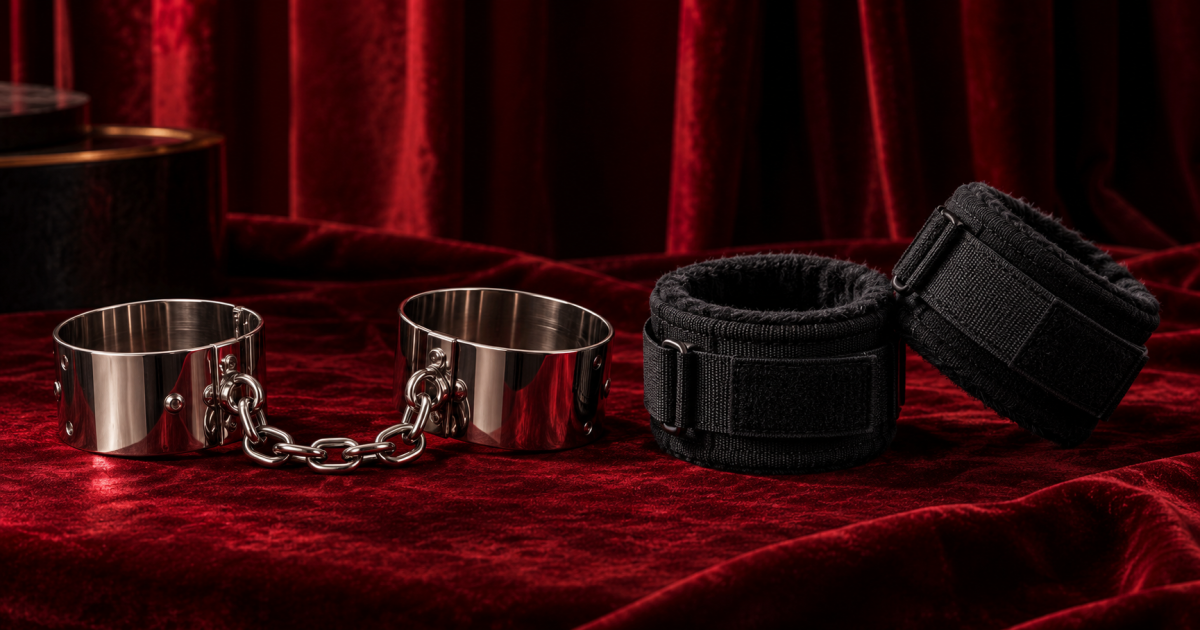
Place polished metal handcuffs beside a pair of padded fabric cuffs and the contrast is immediate. Both signal restraint, yet each creates a different first impression. In BDSM VR, where an object can be held close to the viewer's perspective, that choice helps set the tone before the performer speaks.
Cuffs are simple to read on screen, but their meaning is flexible: strict, playful, ceremonial, or quietly personal depending on the scene. The design gives the performer a cue to work with, not a complete script.
Metal and Its Familiar Signal
A short chain and two rigid bands make metal handcuffs instantly recognizable. Their hard edges and reflective surface can suggest precision or a stern kind of authority. A performer might emphasize that impression through a measured introduction, or soften it with a teasing attitude.
What holds attention is the gap between the object and the mood that follows. Seeing the cuffs may set an expectation; the performer's choices decide whether that expectation is confirmed or turned around.
The Softer Look of Fabric
Padded hook-and-loop cuffs bring a different visual language. Wider straps and fabric textures can make restraint look less formal and more playful. That appearance is not a guarantee of less restriction or greater comfort. Any real use of restraints depends on agreement, communication, and care.
A softer design can still support a firm performance, just as metal can appear in a lighthearted one. The scene's voice, pace, and interaction determine the experience. For a broader look at why limited movement matters on screen, see our guide to restraints in BDSM VR.
Recorded VR adds a fixed camera position while leaving the viewer free to look around. That perspective can give a cuff shown near the camera particular presence. Metal or fabric may catch the eye first; the performer decides what that detail means once the scene begins.