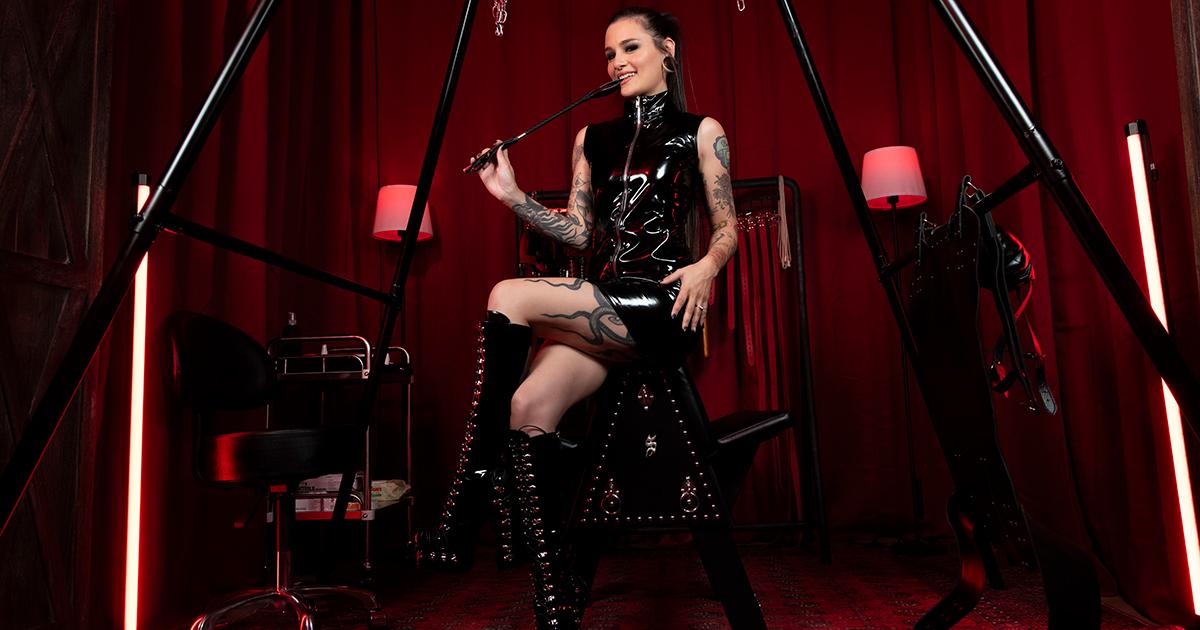

Discipline begins with an expectation. In a BDSM VR scene, a performer seated calmly against red curtains can suggest authority before any punishment appears. The appeal lies in the possibility that a rule will be tested, and in wondering how she will respond.
A rule gives the scene a story
A direction to hold a pose, answer a question, or wait for permission has meaning when the person giving it expects a response. A correction then becomes part of a relationship between characters rather than an isolated action. The viewer follows that exchange: what was asked, what happened, and how the Dominant reacts.
Our introduction to Dom/sub roles explains the broader power dynamic. Discipline gives those roles a particular rule to play against.
Strictness can have more than one tone
A severe look can make a small mistake seem consequential. A smile can turn the same correction into a game. Neither approach requires a crowded set or a long list of props. A chair, a confident pose, and a clear change in expression can establish who holds the authority.
That is why the moment before a consequence often carries its own interest. The viewer has enough information to understand the expectation, but the performer still decides what it means to her. Her attitude gives the scene its character.
Discipline through the VR viewpoint
In a recorded VR scene, the viewer occupies a fixed camera position and can look around. When a performer directs a glance or instruction toward that position, the rule may feel addressed to the viewer. It remains a staged fantasy, yet the perspective can make a brief correction feel immediate.
Outside a performance, power exchange depends on informed agreement and boundaries between adults. On screen, discipline works as a story of expectations and responses. The punishment is only one possible part of that story.