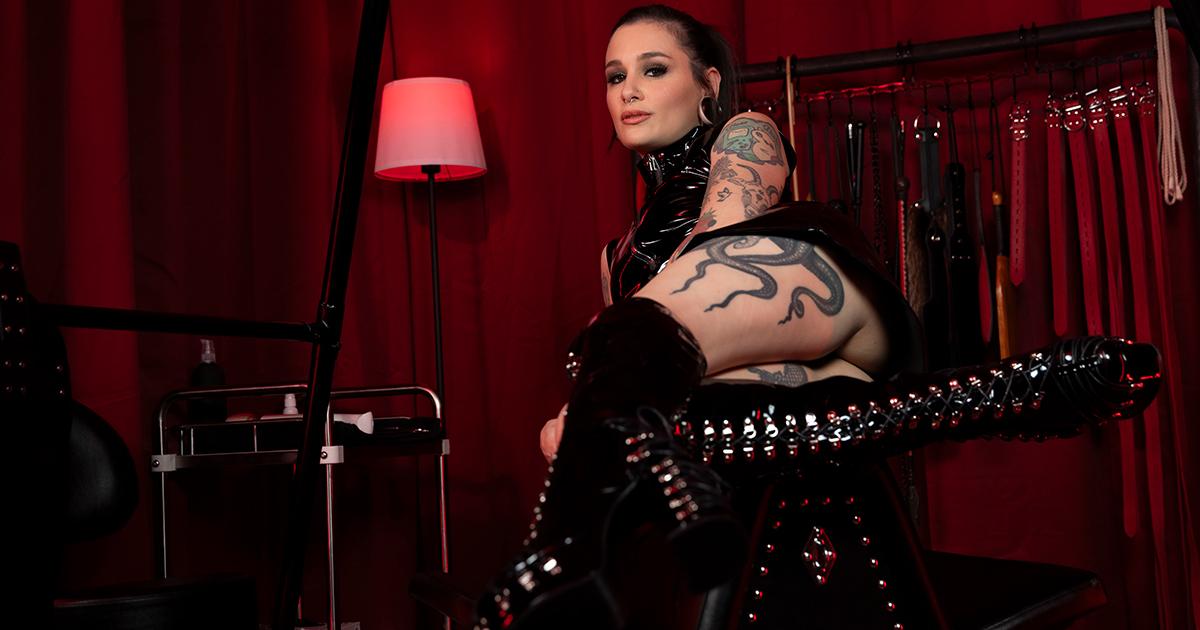

The performer looks toward the camera from within a pale, equipment-filled studio. Her gaze gives the frame a point of contact. Clothing and furniture establish the BDSM setting, but the look is what makes the image feel addressed to someone just outside it.
A look has a direction
Eye contact can invite attention, challenge a response, or hold a moment still. It does not always mean the same thing. A half-smile can make a direct look playful; a neutral expression can make it harder to read. The performer can change the audience's interpretation without changing props or position.
The camera meets the viewer
For a VR viewer, the camera's place matters. When the performer looks toward the lens, the line of sight can appear to meet the viewer's own. A glance away then becomes noticeable. The scene can use that shift to move attention from her face to an object, another person, or the room. It is a small piece of staging with a clear effect. In Ariana Starr's VR scene, her direct gaze remains central as the action moves to a swing.
Timing changes the message
A brief glance may feel like a cue. A longer one can create space for the audience to wonder what comes next. Neither needs a spoken command to carry meaning. The surrounding performance determines whether the moment feels warm, stern, amused, or uncertain.
The camera can bring a look close. What holds attention is the exact moment it changes, asking the audience to interpret the shift before the scene moves on.