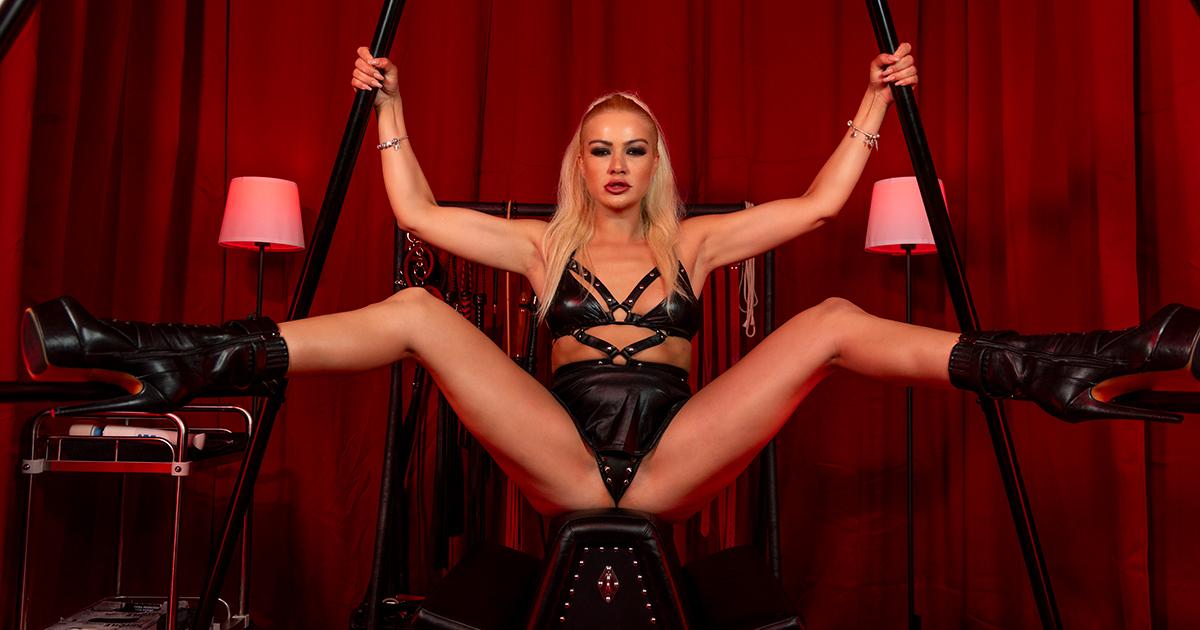
Two dark straps angle upward from the performer's hands, while a low central seat and supports on both sides give the image an unusually clear shape. Before a viewer knows anything about the scene, the equipment has drawn a frame around the person at its center. That is a visual function of BDSM positioning gear that can be overlooked when every prop is discussed only in terms of its possible use.
The geometry of a pose
Straps, furniture, and the space between them tell the eye where to travel. A balanced arrangement can make a pose feel formal or staged; a small shift then becomes easier to notice. Here the red curtains provide a simple background, so the dark lines of the equipment remain readable. The scene does not need a crowded collection of props to communicate structure.
Positioning gear is sometimes treated as a synonym for restraint. The two ideas can meet, but they are not identical. Supports can establish height, distance, and orientation, while a restraint specifically limits movement. A still image cannot show which function a setup serves in motion. It can show how the equipment organizes the frame.
Space in VR
VR gives that arrangement depth. A viewer can register how far the side supports sit from the central seat and how the straps rise out of view. Those distances make the setup feel like part of a room rather than a flat pattern behind the performer. They also give her gestures a steady reference point: the equipment stays in place while expression and posture change.
An effective frame leaves room for the person inside it. The gear provides structure, but the interest comes from watching how the performer occupies the space.