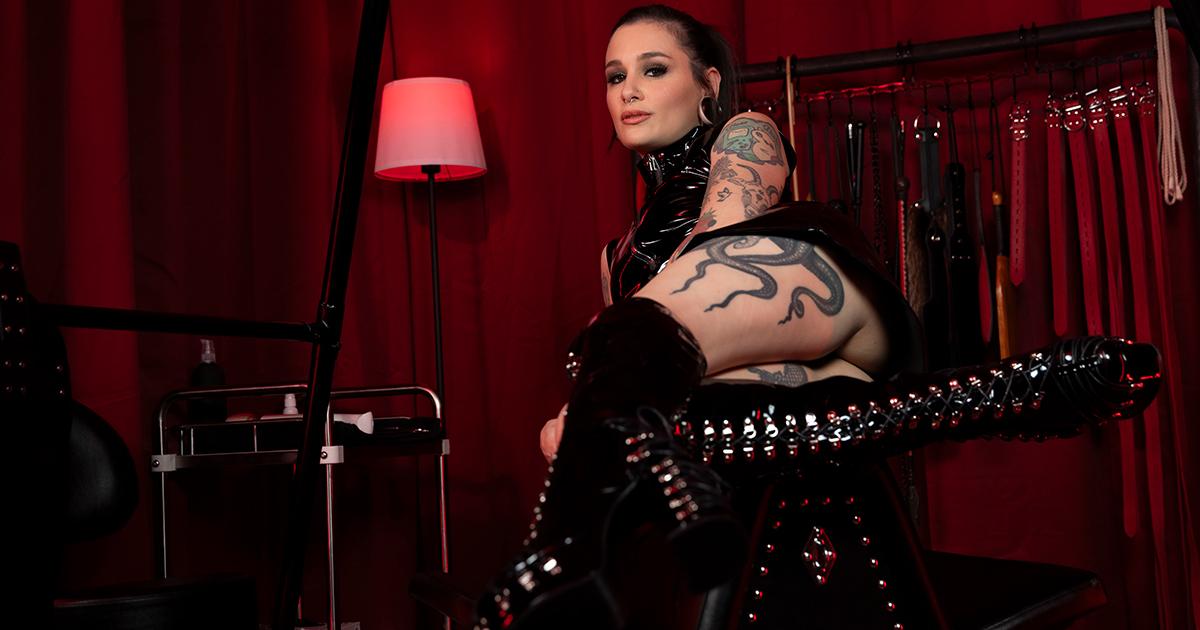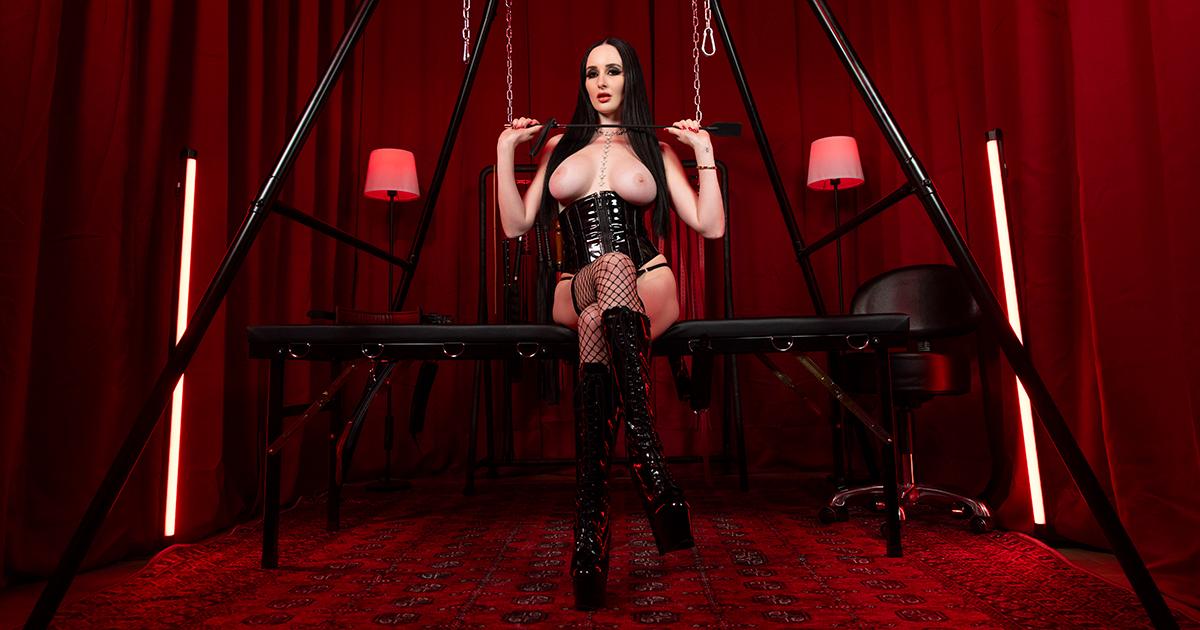
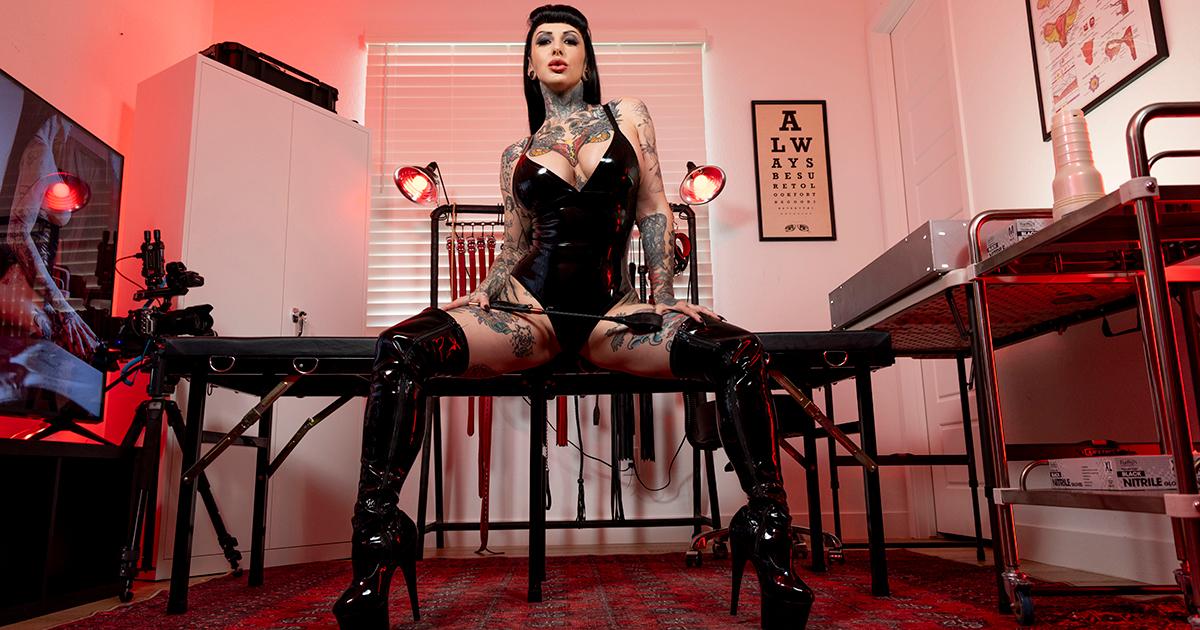
The bench in the photograph gives the studio a center. Its padded surface places the performer at a specific height while lighting and other equipment remain visible around her. A handheld prop can enter or leave the frame. A bench stays put, so it helps define where a scene can unfold.
Furniture sets the positions
A bench may support a seated pose, create space between two people, or sit in the background as part of the room. Those possibilities are different from a claim about what happens in any particular video. The photograph shows a performer posed on the equipment; it does not establish a sequence of acts. What it does show is how the object changes her relationship to the rest of the set. In Lily Lane's VR scene, the action moves from floor restraints to a bench, giving that change of position a concrete example.
A fixed point for movement
That physical layout can make a moment easier to read. When she sits above the floor, her posture and eye line take on a different emphasis. If she moves away, the empty surface remains in view and may still hold the viewer's attention. The bench provides a fixed point against which movement becomes noticeable.
The scale of the room
VR makes furniture feel less like a flat backdrop because the viewer can judge distance and height within the frame. The bench has edges, legs, and space around it. Seeing those dimensions can make a studio feel like a place occupied by a performer rather than a collection of red lights and props.
A bench does not create authority or submission on its own. Its contribution is practical and visual: it gives the performer a place to work with, and it gives the viewer a clearer sense of where they are.