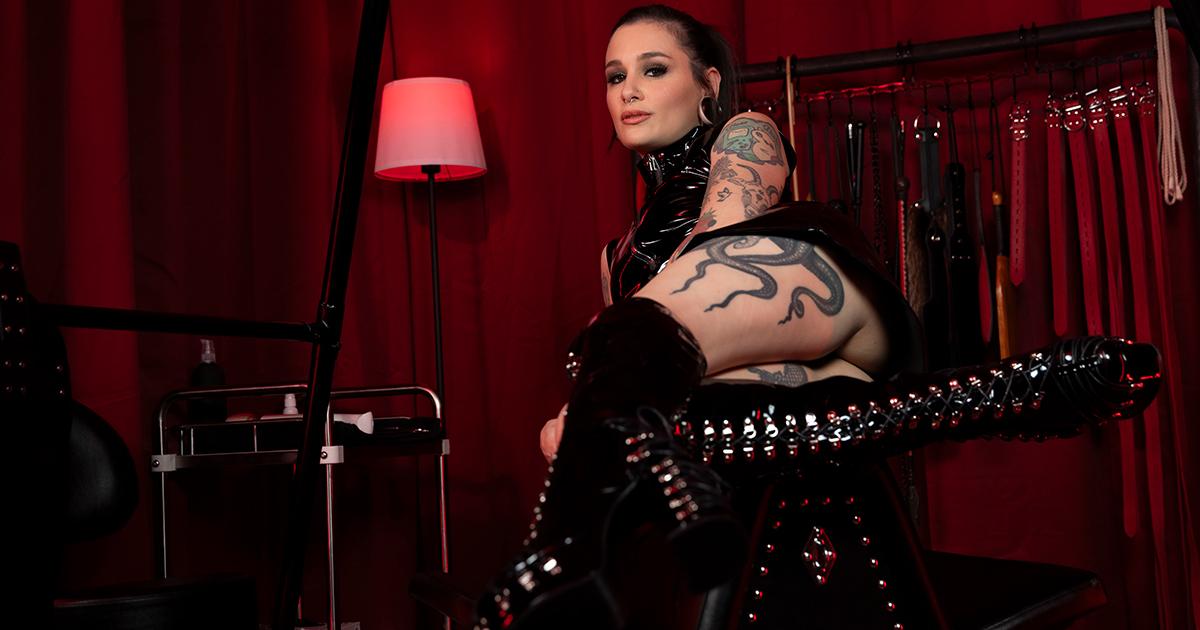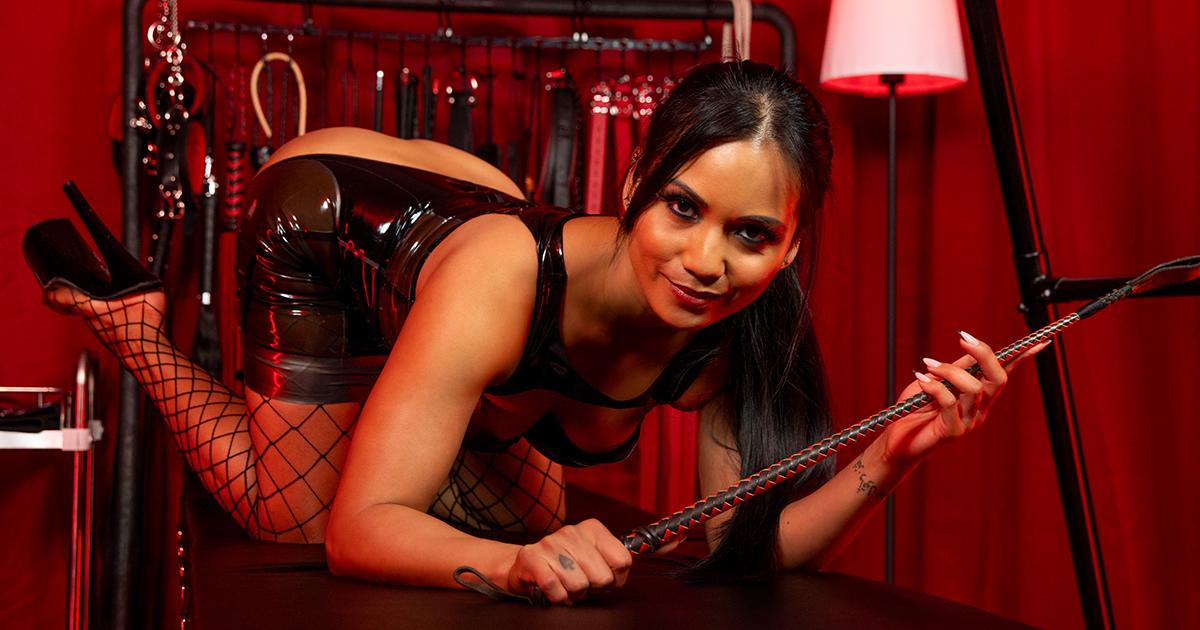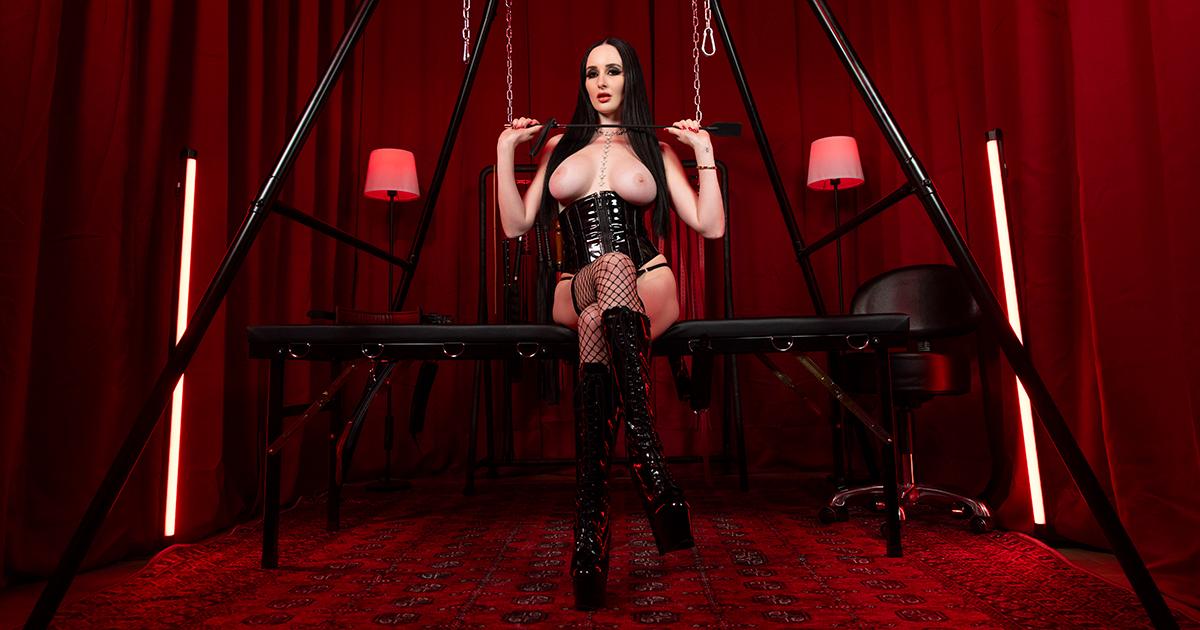
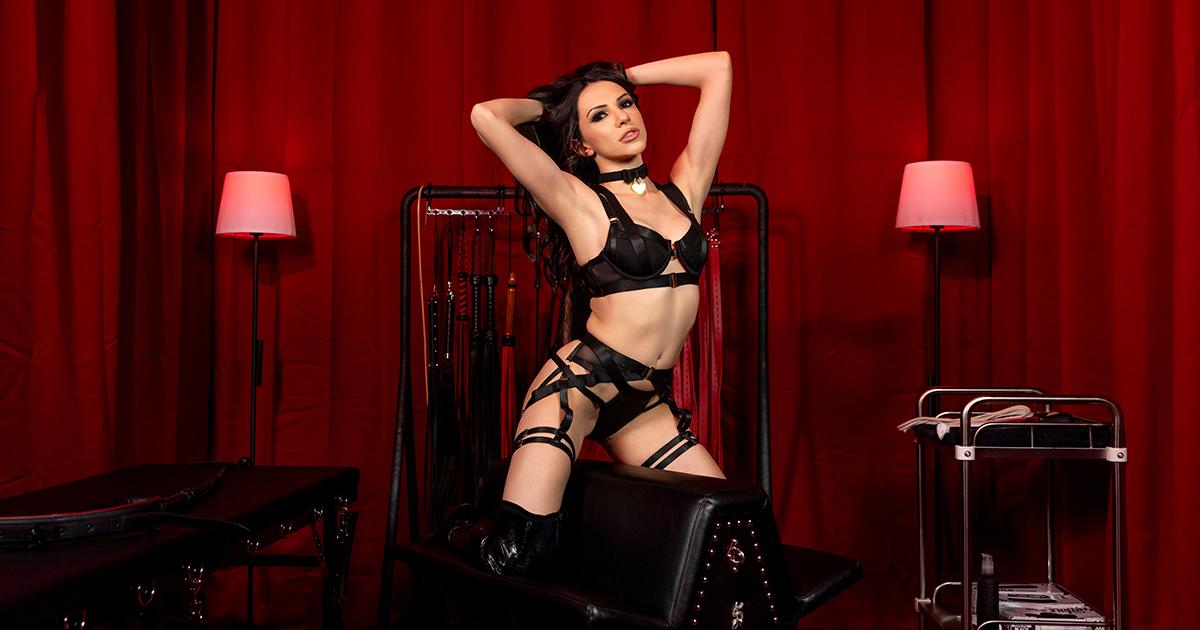
A harness draws attention through its shape. In the banner image, black straps form a clear pattern against the red room while the performer poses near a bench. That pattern is easy to read at a glance. For a femdom VR scene, wardrobe can establish a strong presence before a line of dialogue or a prop enters the action.
Harness or restraint?
A worn harness and a restraint serve different roles. One can be part of a costume; the other limits movement. Some equipment can do both, but a photograph alone cannot tell us how it is used. Treating every strap as evidence of bondage misses what wardrobe contributes on its own: a deliberate outline, a distinct texture, and a visual cue about the scene's style.
Position changes how those lines read. The same harness can look structured when the performer stands and more intricate when she sits or turns. Hardware and dark material respond to light as the camera angle shifts. VR leaves room to notice these small changes while still seeing the person and the surrounding set. In Lily Lane's scene, a harness appears in the opening before the action moves to a bench.
The performer gives it meaning
A harness cannot supply a character by itself. Expression, voice, and movement decide whether the look feels severe, playful, or theatrical. A calm pose may make the design seem formal; a quick gesture can change the mood without changing a single piece of clothing. That range is why the item remains useful across very different femdom scenes.
The most memorable detail is often the relationship between costume and performance. The straps create a visual frame, but the performer decides what happens inside it.