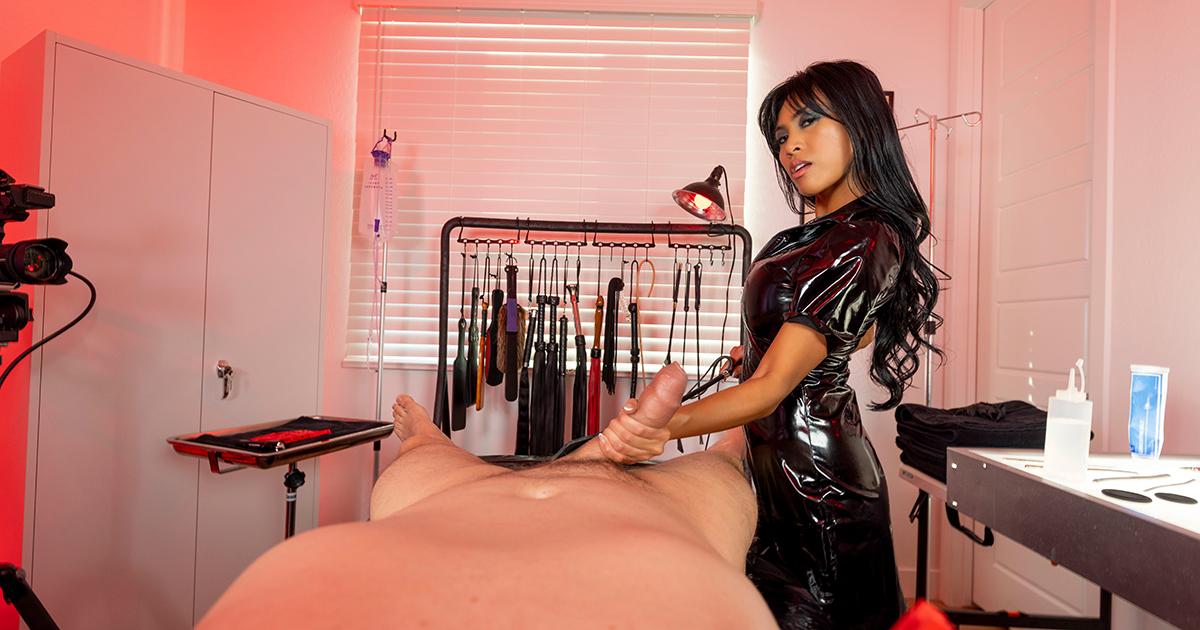
A production camera sits at the edge of this bright studio photograph. The performer and equipment rack remain the main subjects, but the camera changes how the image reads. It makes the viewpoint visible instead of asking the audience to forget that someone chose it.
A visible point of view
VR depends on where the lens is placed. Height, distance, and angle determine how close a gesture appears and which parts of the room remain in sight. A camera shown in a promotional still does not tell us the position used in the finished video. It does invite a useful question: what would the viewer notice from that position?
The idea also helps explain why eye contact in femdom VR can feel so direct. A look toward a lens only meets the audience when the framing gives it a clear path. Move the camera, and the same look may seem to pass by instead.
The room around the shot
The pale walls and open blinds make this set feel different from the red-curtained rooms in many R3DVR banners. The rack of props is easy to see, as are the lamp and the space around the performer. Nothing in the photograph needs to imply a particular act; the visible layout already gives the image its character.
A camera at the edge of a still can briefly pull attention from fantasy to craft. That shift is revealing. The sense of presence in VR begins with a series of practical choices about where to place the viewer.